Every vote helps us continue serving Orange/Chatham County, and your support means the world to our local team.
20% OFF URB Trippin Gummies (Buy 2+) ~ Use Code: trippin20off
Buy 1 Bhumi, get 25% OFF your 2nd item ~ Use Coupon Code: bhumi25off
Get 5 items For 15% OFF – Mix & Sav ~ Use Coupon Code: bfcm15off

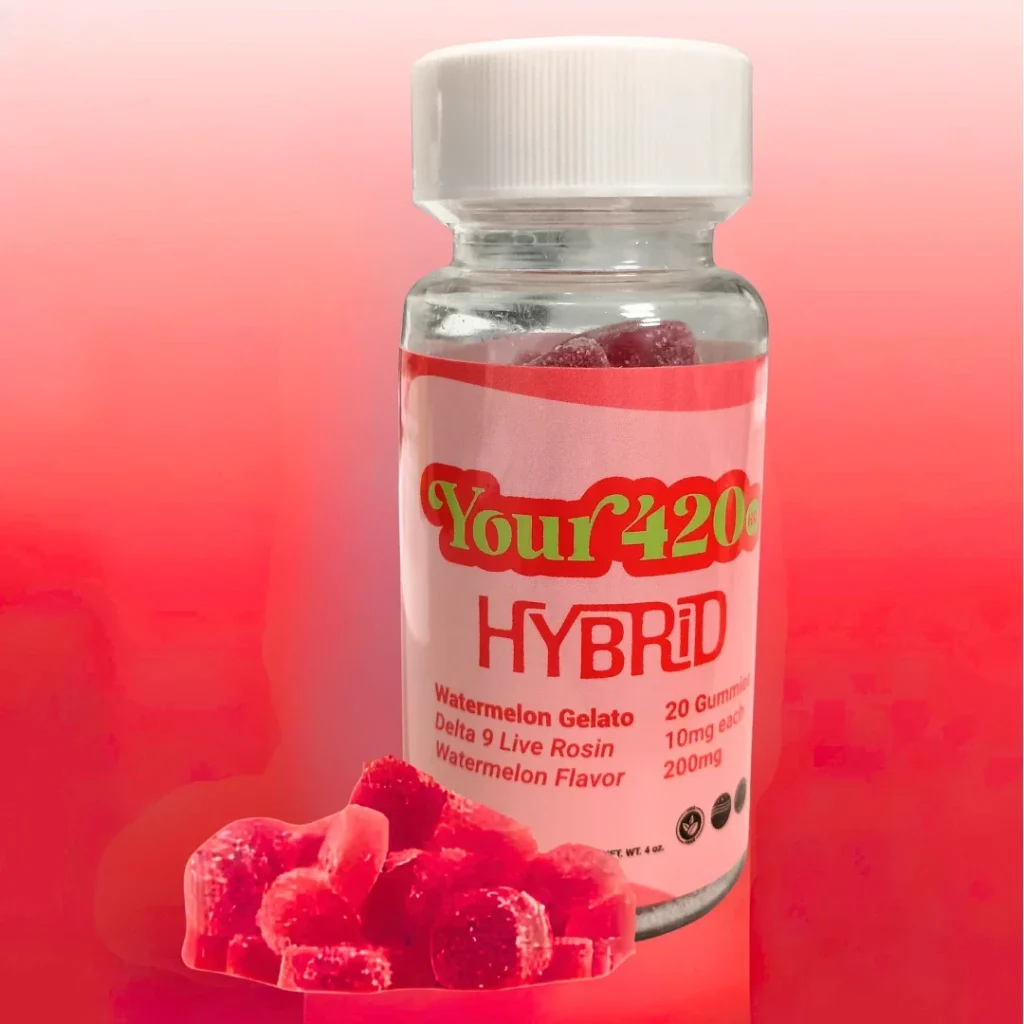
Delta-9 gummies sit at the intersection of hemp and cannabis law. Their legality depends on both the source of the THC and where you live. Hemp-derived versions that stay under 0.3 % Delta-9 THC by dry weight are federally legal—but marijuana-derived ones remain restricted.
At Carolina Hemp Hut, we help you understand what “hemp-derived” really means and how lab reports prove compliance. Our goal is to teach you how to read COAs, recognize trustworthy brands, and buy legally, wherever you are.
This guide covers how Delta-9 gummies are made, what the Farm Bill allows, how states differ, and what to look for on labels so you can stay confident and compliant.
What Are Delta-9 Gummies?
Delta-9 gummies are edible candies that contain Delta-9 THC. They come in set doses, originate from either hemp or marijuana plants, and are made to be eaten rather than smoked.
Delta-9 THC Explained
Delta-9 THC (Delta-9 tetrahydrocannabinol) is the main psychoactive compound in cannabis that produces the “high.” You’ll see it written as delta-9, delta 9, delta-9 THC, or delta 9 THC on labels. The chemical is the same no matter the source, but the legal status often depends on whether it came from hemp or marijuana.
Hemp-derived delta-9 THC products must meet federal rules that cap concentration at 0.3% by dry weight to be considered hemp. Marijuana-derived products usually have higher THC and are regulated under state cannabis laws.
Always check labels and third-party lab tests (COAs) to confirm THC amount and purity.
How Delta-9 Gummies Are Made
Manufacturers start with an extract that contains delta-9 THC, sourced from hemp or marijuana plants. Producers blend the extract with a gummy base—gelatin or pectin—sweeteners, flavors, and sometimes other cannabinoids like CBD.
Each gummy contains a set milligram amount (for example, 5–10 mg THC). Third-party lab testing checks potency and contaminants.
Packaging lists milligrams per gummy and total THC. If a product claims to be hemp-derived and legal under federal law, its COA should show the finished gummy’s dry-weight delta-9 concentration at or below 0.3%.
Effects and Uses of Delta-9 Gummies
When you eat a delta-9 gummy, THC passes through your digestive system and liver before entering your bloodstream. Effects take longer to start—often 30 minutes to 2 hours—but can last several hours. You may feel relaxed, sleepy, or notice changes in perception.
People use delta-9 THC gummies for sleep, stress relief, pain, or recreation. Start with a low dose if you’re new, wait at least two hours before taking more, and avoid mixing with alcohol or medications.
Keep gummies away from children and pets, and follow local laws, because legality and limits vary by state.
Federal Legal Status of Delta-9 Gummies
Federal law allows some Delta-9 gummies to be sold and shipped while banning others. What matters is the plant source, the product’s Delta-9 concentration, and which federal statutes apply.
2018 Farm Bill Overview
The 2018 Farm Bill changed federal law for hemp. It removed hemp from the Controlled Substances Act when the plant and its extracts contain no more than 0.3% Delta-9 THC by dry weight.
That made many hemp-derived products legal to grow, sell, and transport across state lines under federal law.
If your gummy is made from hemp and the final product’s Delta-9 THC concentration stays at or below 0.3% on a dry weight basis, it generally meets the Farm Bill’s definition of legal hemp. The bill covers all parts of Cannabis sativa, including extracts and cannabinoids, when they meet that limit.
Hemp’s Federal Definition Changed in 2018
According to the U.S. Department of Agriculture (USDA), the 2018 Farm Bill defined hemp as any Cannabis sativa L. plant and its derivatives with no more than 0.3 % Delta-9 THC on a dry weight basis.
This legal line separates hemp from marijuana and enables interstate commerce for compliant products like hemp-derived gummies.
The Role of the Controlled Substances Act
The Controlled Substances Act (CSA) still classifies marijuana and higher-THC cannabis as federally illegal. If a Delta-9 gummy comes from marijuana or has more than the 0.3% threshold, it remains a Schedule I matter under the CSA and is illegal federally.
CSA rules apply to substances classified as marijuana, while the Farm Bill creates an exception for hemp that meets the defined THC limit. Federal enforcement often focuses on whether the product truly originates from hemp and complies with lab testing.
Defining Legal THC Limits (0.3% Rule)
The 0.3% rule measures Delta-9 THC on a dry weight basis for the entire hemp material. For edibles like gummies, the percentage is calculated from the product’s dry weight, not per serving.
A larger gummy can contain more milligrams of Delta-9, but still meet the 0.3% legal threshold if the overall dry weight keeps the percentage low.
Look for a Certificate of Analysis (COA) from a third-party lab. A COA shows the measured Delta-9 THC percentage and confirms compliance with the 0.3% limit. Without reliable lab results, you cannot be sure a product meets the federal definition of hemp-derived Delta-9 THC.
Hemp-Derived vs. Marijuana-Derived Delta-9
Hemp-derived Delta-9 THC and marijuana-derived Delta-9 THC are chemically the same, but the law treats them differently. When Delta-9 comes from hemp and stays within the 0.3% limit, federal law generally permits it.
When it comes from marijuana or exceeds 0.3%, it is treated as an illegal marijuana product under federal law.
Check product labeling and COAs to confirm origin and THC levels. Sellers that source Delta-9 from hemp should state “hemp-derived” and provide test results. If you cannot verify the source or the THC percentage, assume the product may not be federally legal.
State-by-State Legality and Restrictions
Laws on delta-9 gummies vary by state. Some states allow hemp-derived gummies under the 0.3% dry weight limit, while others add limits, labeling rules, or outright bans.
States Where Delta-9 Gummies Are Legal
You can buy hemp-derived delta-9 gummies in many states if the product stays at or below 0.3% Delta-9 THC by dry weight.
States with full recreational programs — like California, Colorado, and Arizona — let licensed dispensaries sell gummies with clear per-serving and per-package limits (for example, 10 mg per serving or 100 mg per package in several states).
Other states without full recreational markets still allow hemp-derived gummies under the 2018 Farm Bill.
In those places, you’ll often find gummies sold in CBD shops or online, provided packaging meets state rules for age, child-resistant containers, and labeling. Always check local rules before you buy or travel with gummies.
States With Restrictions or Bans
Some states restrict or ban hemp-derived delta-9 products despite the Farm Bill. Restrictions include strict per-serving limits (like Iowa’s rules that set low milligram caps), shape rules to avoid child appeal, and required warning labels.
Other states passed laws or bills that limit delta-9 analogs (look up SB 6, SB 893, or SB 6699 in their state contexts) or explicitly ban certain hemp THC products. A few states treat any THC product like marijuana and keep delta-9 illegal unless sold through a medical or recreational dispensary.
If you live in or visit a state with HB 758, HB 4517, or HB 948 proposals, check recent legislative updates — these bills have affected how hemp products are defined and sold in some states.
Recent and Notable Legislation
State-level bills and agency rules have shifted the market quickly. Oregon’s Liquor and Cannabis Commission has updated packaging and potency rules that affect edibles and gummies sold through dispensaries.
In several states, recent laws tightened limits or clarified that “hemp-derived” is the key test. Iowa’s Hemp Act and similar measures set serving and package limits and added labeling and testing rules.
Other notable actions include court fights and emergency rules that targeted delta-8 and other analogs, which in turn influenced how delta-9 is regulated. Track state bill numbers and agency guidance where you live to stay compliant.
Comparing Hemp and Marijuana Products
Hemp and marijuana products differ in how they’re made, their strength, and the types of CBD or delta‑9 they contain. Understanding these differences helps you pick the right edible or flower for your needs and stay within legal limits.
Differences in Production and Potency
Hemp and marijuana come from the same plant species, but growers use different strains and methods. Hemp is bred to keep Delta‑9 THC under 0.3% by dry weight. That low THC means hemp flower and hemp-derived edibles usually produce milder effects than marijuana products.
Marijuana strains (sativa, indica, hybrids) are grown for higher THC. Dispensary gummies and flower often list THC percentages like 15–30% for flower or 5–50 mg per edible. Hemp-derived delta‑9 gummies reach higher milligram doses by extracting concentrated hemp cannabinoids, but the product still must meet the 0.3% rule if measured by dry weight.
Processing differs, too. Hemp-derived CBD oil uses CO2 or ethanol extraction to pull cannabinoids from hemp. Marijuana products may use similar methods but target high-THC profiles and may add terpenes to boost effects.
CBD and Delta-9 THC Content
Check labels for exact milligrams. Hemp products typically advertise CBD milligrams clearly (e.g., 500 mg CBD per bottle) and show total delta‑9 amounts per serving. Hemp-derived delta‑9 gummies often contain 5–10 mg Delta‑9 per gummy while staying within legal THC percentages when measured by weight of the hemp material.
Marijuana edibles list THC per serving and per package. A 10 mg THC gummy from a dispensary will give stronger psychoactive effects than a hemp product with the same milligram amount, only if potency and testing differ.
CBD oil from hemp can contain trace delta‑9; good brands post lab tests (COAs) showing exact CBD, delta‑9, and other cannabinoids.
If you want non-intoxicating effects, choose high-CBD, low-delta‑9 hemp products. If you want a stronger psychoactive effect, marijuana products or high-dose concentrates are the clearer choice where legal.
Hemp Flower, CBD Oil, and Other Variants
Hemp flower looks like marijuana flower but has low THC. You can smoke or vape hemp flower for mild effects and a fuller CBD and terpene profile. CBD oil comes as tinctures, capsules, or vape liquids and focuses on CBD; labels often list CBD mg and may list hemp-derived delta‑9 levels.
Other variants include:
- Delta‑8 or Delta‑10 products, hemp-derived THC isomers with different legal status and effects.
- Broad‑spectrum CBD (no THC) and full‑spectrum CBD (trace THC up to 0.3%).
- Hemp-derived delta‑9 gummies and capsules that combine CBD with measured delta‑9.
Always read the Certificate of Analysis. It shows CBD, delta‑9 THC, and other cannabinoids, and confirms whether the product was made from hemp or marijuana. This protects you from unexpected potency and legal risk.
Delta-9 Gummies vs. Other Cannabinoids
Delta-9 gummies deliver the classic THC experience and are often hemp-derived to meet the 0.3% dry-weight rule. Delta-9 differs from Delta-8, synthetic cannabinoids, and novel compounds like THC-O in source, strength, and legal risk.
Delta 8 vs. Delta 9 Gummies
Delta-8 THC is a close chemical cousin of delta-9 THC. Delta-8 gummies are usually marketed as milder and less intense than delta-9, but effects depend on dose and individual tolerance.
Many delta-8 products come from hemp-derived CBD converted into delta-8. That conversion can create impurities if manufacturers don’t use clean methods or lab testing. Look for third-party Certificates of Analysis that list delta-8 THC content and contaminants.
For predictability, choose delta-9 gummies that list milligrams per piece and show full-panel lab results. Start low with either type: delta-8 can still cause impairment, and delta-9 often feels stronger for most users.
Delta-9 Gummies and Synthetic Cannabinoids
Synthetic cannabinoids are lab-made chemicals that act on the same brain receptors as THC but are not the same molecules. These are commonly found in products sold as “spice” or “K2,” not in regulated gummies.
Avoid any edible that contains synthetic cannabinoids. They can cause severe, unpredictable reactions and are often illegal. Always check lab reports to confirm the product lists only natural cannabinoids and not unidentified synthetic peaks.
Buy from manufacturers that publish Certificates of Analysis showing cannabinoid profiles and tests for solvents, heavy metals, and pesticides. That reduces the chance your gummy contains untested synthetic compounds.
THC-O and Other Novel Compounds
THC-O acetate (THC-O) and other novel cannabinoids are sometimes marketed as stronger or different-feeling alternatives to delta-9. THC-O is not a natural plant cannabinoid; it’s produced via chemical modification and may require acetylation steps that use strong reagents.
Those chemical steps raise concerns about potency and safety. THC-O can be much more potent than delta-9, increasing overdose risk, while poor synthesis can leave harmful residues. Legal status remains unclear in many places; some states ban novel cannabinoids outright.
If you consider a product with THC-O or similar compounds, check for clear labeling, mg-per-dose info, and full-panel third-party testing. When in doubt, choose hemp-derived delta-9 gummies with transparent lab results for a more predictable experience.
Product Safety, Compliance, and Buying Tips
Focus on proof of testing, clear labels, correct dosing, and age limits when shopping. Look for third-party lab results, accurate ingredient lists, and packaging that meets state rules.
Lab Testing and Labeling Requirements
Ask for a Certificate of Analysis (COA) from an independent lab. The COA should show the Delta-9 THC amount, total cannabinoids, and tests for pesticides, heavy metals, and solvents. Match the COA batch number to the product lot number on the package.
Check the test date and lab name. Prefer labs with public profiles or accreditation. If a brand won’t share a COA, don’t buy from them.
Labels should list total milligrams of Delta-9 per serving and per package, full ingredient list, and serving size. Warnings about impairment and storage help keep you safer. Country-of-origin or “hemp-derived” wording tells you the source.
Dosage, Packaging, and Age Restrictions
Start with a low dose if you’re new—5–10 mg of Delta-9 THC is a common beginner range. Wait at least two hours before taking more because edibles act slowly. Keep a dosing log to track effects and avoid doubling up.
Child-resistant packaging is required or strongly advised for adult-use hemp products. The package should be opaque and sealed, with plain labeling that avoids appealing shapes for kids.
Most states require buyers to be 21 or older for hemp-derived Delta-9 THC edibles. Retailers must check ID for in-store and online sales. Shipping rules vary; confirm a seller’s shipping policy and that they verify age at delivery if needed.
How to Identify Legal Delta-9 Gummies
Legal hemp-derived Delta-9 gummies generally state they contain less than 0.3% Delta-9 THC by dry weight. Calculate compliance when needed: check total gummy weight and mg of Delta-9 listed on the COA to confirm the percentage limit.
Look for “hemp-derived” language and a COA link or QR code on the label. Avoid products that only list “THC” without specifying Delta-9, or that claim unrealistic effects.
Verify the seller’s transparency: reputable brands post lab reports, contact info, and business registration. If the product is sold in a state that bans such edibles, don’t buy or ship it there.
Staying Legal When Buying Delta-9 Gummies
Delta-9 gummies can be federally legal when they come from hemp and stay within the 0.3 % THC limit. The difference between hemp and marijuana sources defines your legal risk, so reading labels and COAs is essential.
At Carolina Hemp Hut, we believe legal clarity keeps our community safe. We teach customers to verify lab data, understand state rules, and shop responsibly for tested, hemp-derived products that meet federal standards.
Before buying Delta-9 gummies, confirm the source and state law, then choose lab-verified brands. Visit our Hillsborough shop for trusted hemp education or explore our online collection of compliant THC edibles.
Frequently Asked Questions
What’s the difference between Delta-9 gummies and other cannabis edibles?
Delta-9 gummies contain Delta-9 THC, the main compound that causes a high. Other edibles might contain Delta-8, Delta-10, THC-A, or CBD, which differ in strength and legal status. Hemp-derived Delta-9 gummies must follow the 0.3% Delta-9 THC by dry weight federal rule, while marijuana-derived edibles follow state cannabis laws.
Can you legally purchase Delta-9 gummies in California?
Yes, you can buy Delta-9 gummies from licensed dispensaries if they come from marijuana. Hemp-derived Delta-9 gummies that meet federal limits may face state rules or retailer policies, so availability varies. You must be 21 or older.
What are the effects of 10 mg of Delta-9 THC in gummies?
For most adults, 10 mg produces noticeable intoxication, including relaxation, euphoria, and slower reaction time. Effects depend on tolerance, body weight, metabolism, and whether you ate first. Start lower if you are inexperienced and wait at least two hours before taking more.
Are there any states where Delta-9 gummies are prohibited?
Yes. Some states ban all forms of Delta-9 THC, regardless of source. Others limit hemp-derived cannabinoids or have strict packaging and potency rules. Always check your state laws before buying or shipping gummies.
What makes certain Delta-9 gummies stronger than others?
Strength depends on the amount of Delta-9 THC per gummy and its size. A larger gummy can contain more milligrams while still meeting the 0.3% dry weight rule. Purity and added cannabinoids can also affect potency.
Could possessing Delta-9 THC gummies be considered a felony?
Possession can become a felony if the product violates state or federal law—such as when THC exceeds legal limits, the product is marijuana in a non-legal state, or you have large quantities or intent to distribute.
Keep proof of purchase, COAs, and follow local possession limits to reduce legal risk.

Our Products
-
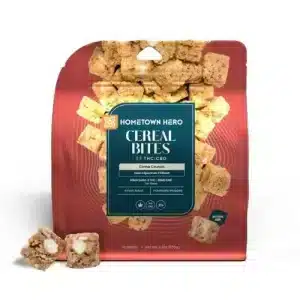
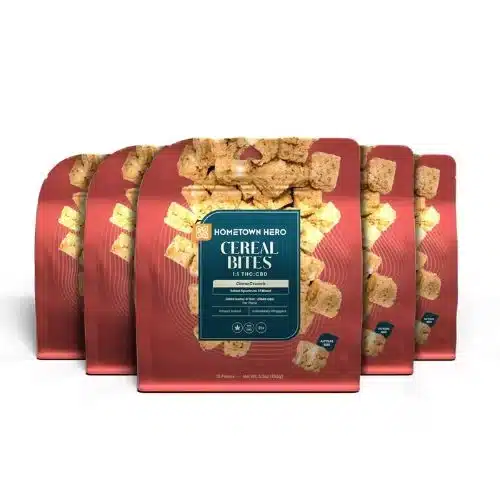
Hometown Hero Cereal Bites Cinna Crunch | Delta-9 THC + CBD
-
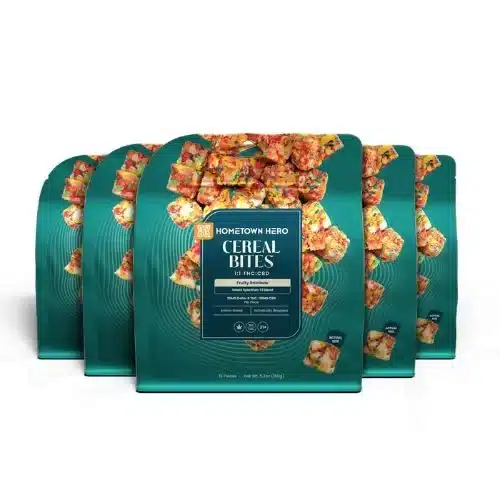
Hometown Hero Cereal Bites Fruity Rainbow | Delta-9 THC + CBD
-
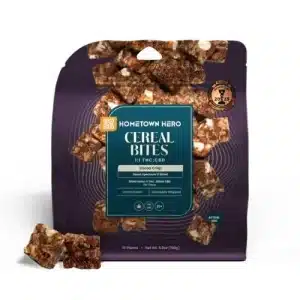
Hometown Hero Cereal Bites Cocoa Crisp | 1:1 Delta-9 THC + CBD
-
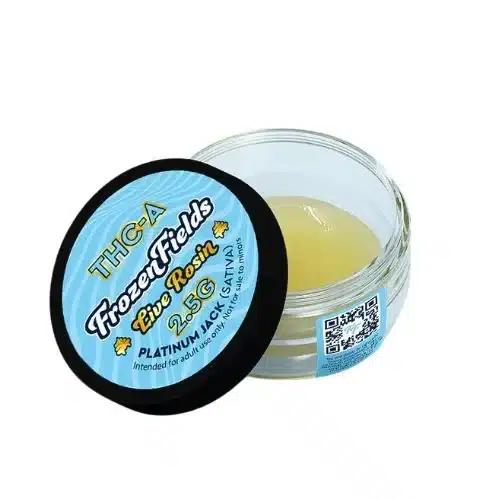
Frozen Fields THCA Live Rosin | 2.5g Solventless Concentrate
ConcentratesFrozen Fields THCA Live Rosin | 2.5g Solventless Concentrate
$49.95 Select options This product has multiple variants. The options may be chosen on the product page